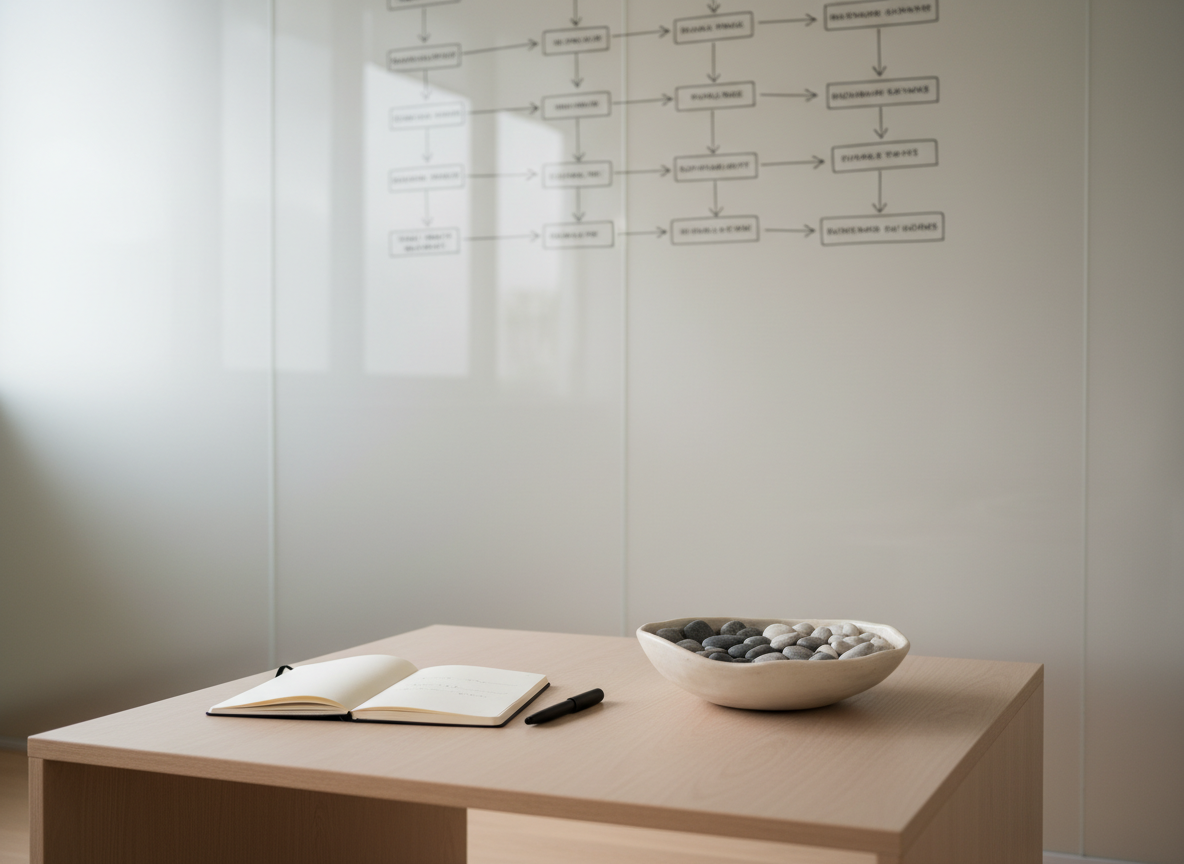
A serene, minimalist meeting space with a low, light-wood coffee table at the center, holding an open, unbranded notebook, a capped black pen, and a single ceramic bowl filled with smooth, matte grey and white pebbles arranged in a subtle gradient. Behind the table stands a large, frosted glass panel partially revealing a diagram of behavioural pathways sketched in thin marker lines. Diffused overcast daylight filters through, creating an even, soft glow with no harsh contrasts, and gentle reflections in the glass. Photographic realism, eye-level composition with shallow depth of field, keeping the table in sharp focus while the background fades into a creamy blur. The mood is calm, confidential, and professional, evoking a safe, reflective environment for non-directive coaching conversations rooted in behavioural insight.

Coaching Philosophy

Behaviour & Balance fuses non-directive coaching with behavioural science to unlock lasting change. We make insights practical for everyday life.

Meet the Team
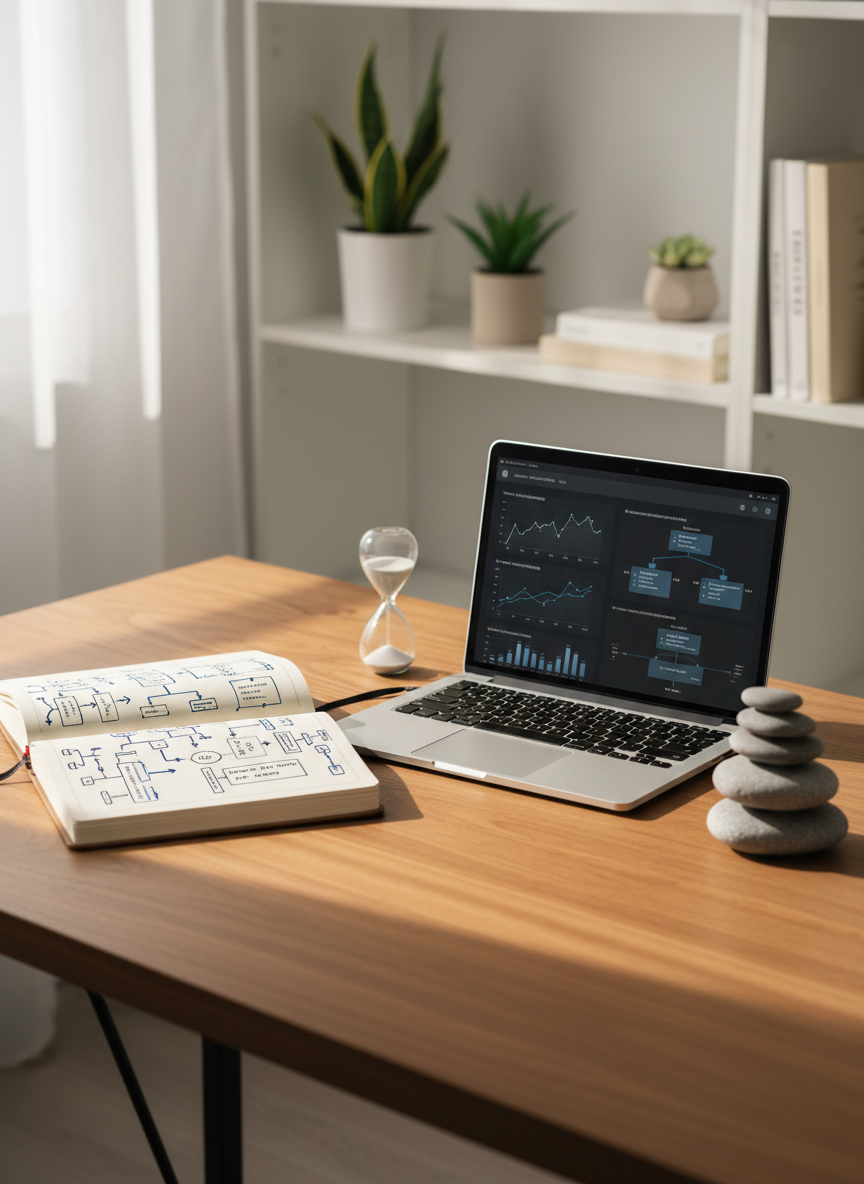
A meticulously arranged wooden desk in a calm, modern workspace, featuring an open hardcover notebook filled with neat, hand-drawn behaviour diagrams and flowcharts. Beside it rests a slim, silver laptop displaying a clean dashboard of behavioural data visualizations and graphs. A small sand timer and a balanced stack of smooth river stones add tactile symbols of time and equilibrium. Soft natural daylight pours in from an unseen window to the left, creating gentle highlights on the wood grain and laptop edges, with subtle, elongated shadows. Photographic realism, eye-level composition using the rule of thirds, with a slightly blurred background of minimalist shelving and plants. The mood is professional, focused, and quietly reflective, conveying structured thinking and evidence-based coaching grounded in behavioural science.

Aarav Sharma

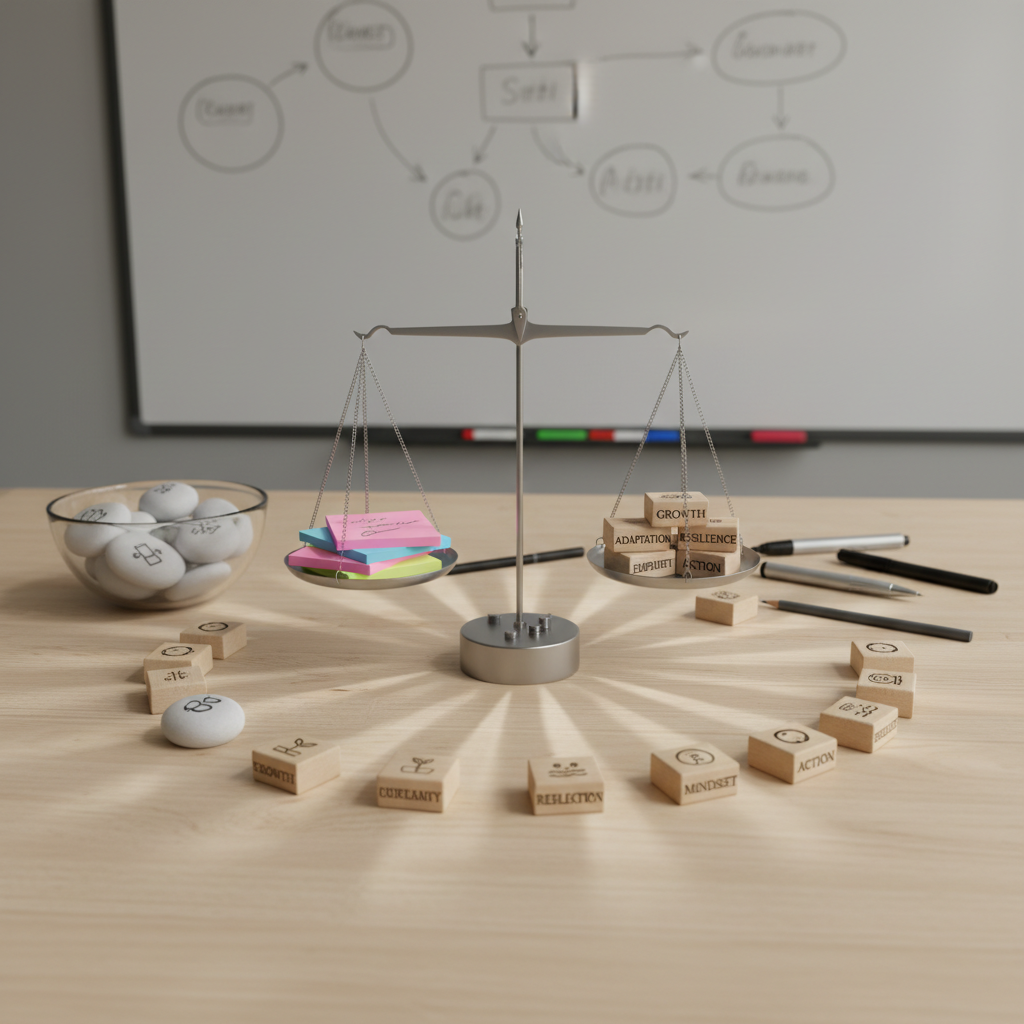
A circular arrangement of objects on a light oak table representing balance and change: a precision-balanced metal scale with one side holding colorful sticky notes and the other side small wooden blocks labeled with abstract behavioural concepts. Nearby, a clear glass bowl contains polished white and grey stones, each etched with minimalist icons of growth, reflection, and balance. A large, unmarked whiteboard stands in the background, filled with faint, partially erased diagrams. Soft studio lighting creates even illumination with subtle reflections on the metal scale, casting delicate, radial shadows from the center. Photographic realism, shot from slightly above, emphasizing the circular composition and symmetry. The atmosphere is thoughtful, methodical, and optimistic, suggesting a structured yet flexible coaching process grounded in behavioural theory.

Mateo García

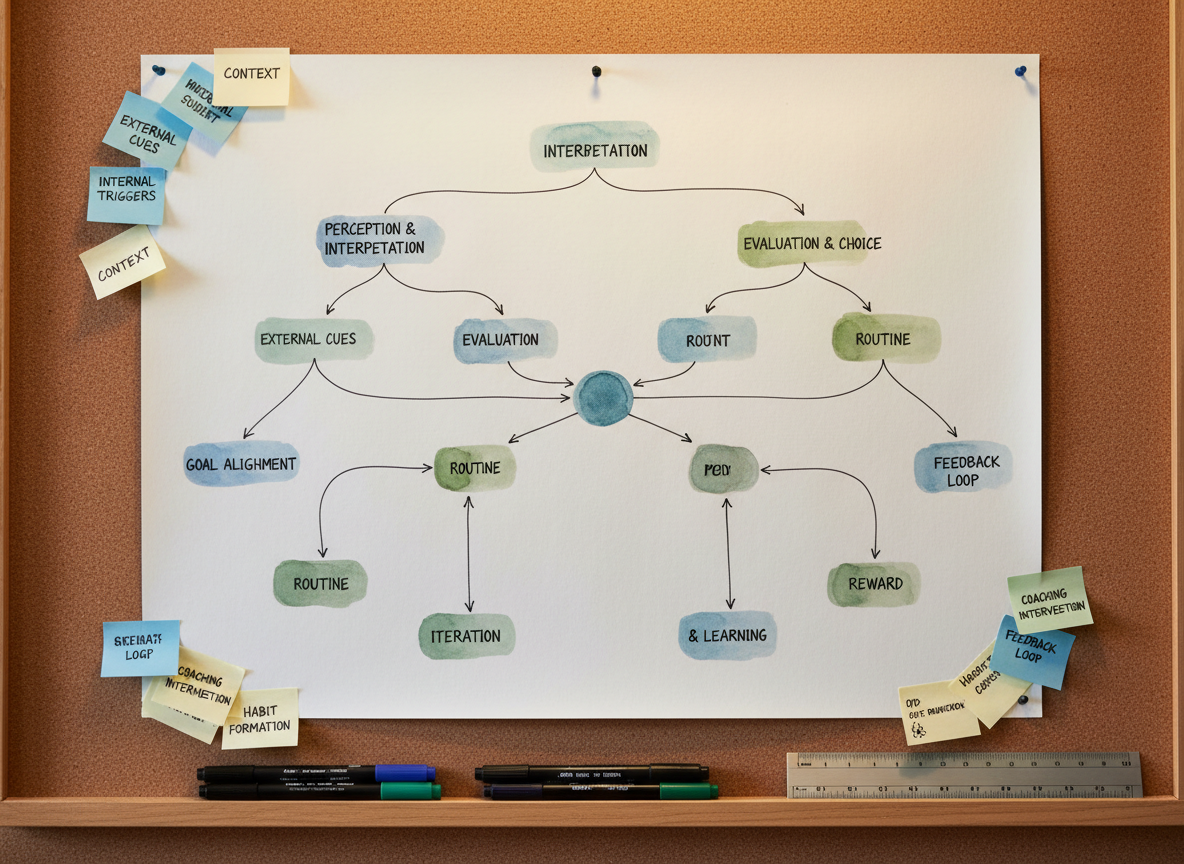
A close-up of a large, matte-white poster pinned to a corkboard, displaying an elegant, hand-drawn behavioural decision tree in fine black ink, with key nodes highlighted in muted blues and greens. Small, color-coordinated sticky notes fan outward from the edges, containing succinct, typed prompts like “context”, “habit”, and “feedback”, though still generic and non-identifying. A neatly arranged row of fine-tipped markers and a precision metal ruler rest along the corkboard ledge beneath. Warm, indirect office lighting creates soft, ambient illumination with minimal shadows, enhancing the clarity of lines and colors. Photographic realism, shot straight-on with sharp focus across the entire frame, giving a clean, analytical yet approachable feel. The mood is intellectually curious and structured, reflecting behavioural science research translated into practical coaching tools and workshop materials.

Zuri Ndlovu

A serene, minimalist meeting space with a low, light-wood coffee table at the center, holding an open, unbranded notebook, a capped black pen, and a single ceramic bowl filled with smooth, matte grey and white pebbles arranged in a subtle gradient. Behind the table stands a large, frosted glass panel partially revealing a diagram of behavioural pathways sketched in thin marker lines. Diffused overcast daylight filters through, creating an even, soft glow with no harsh contrasts, and gentle reflections in the glass. Photographic realism, eye-level composition with shallow depth of field, keeping the table in sharp focus while the background fades into a creamy blur. The mood is calm, confidential, and professional, evoking a safe, reflective environment for non-directive coaching conversations rooted in behavioural insight.

Leila Haddad

A meticulously arranged wooden desk in a calm, modern workspace, featuring an open hardcover notebook filled with neat, hand-drawn behaviour diagrams and flowcharts. Beside it rests a slim, silver laptop displaying a clean dashboard of behavioural data visualizations and graphs. A small sand timer and a balanced stack of smooth river stones add tactile symbols of time and equilibrium. Soft natural daylight pours in from an unseen window to the left, creating gentle highlights on the wood grain and laptop edges, with subtle, elongated shadows. Photographic realism, eye-level composition using the rule of thirds, with a slightly blurred background of minimalist shelving and plants. The mood is professional, focused, and quietly reflective, conveying structured thinking and evidence-based coaching grounded in behavioural science.

Hiroshi Tanaka

A circular arrangement of objects on a light oak table representing balance and change: a precision-balanced metal scale with one side holding colorful sticky notes and the other side small wooden blocks labeled with abstract behavioural concepts. Nearby, a clear glass bowl contains polished white and grey stones, each etched with minimalist icons of growth, reflection, and balance. A large, unmarked whiteboard stands in the background, filled with faint, partially erased diagrams. Soft studio lighting creates even illumination with subtle reflections on the metal scale, casting delicate, radial shadows from the center. Photographic realism, shot from slightly above, emphasizing the circular composition and symmetry. The atmosphere is thoughtful, methodical, and optimistic, suggesting a structured yet flexible coaching process grounded in behavioural theory.

Amara Okafor

A close-up of a large, matte-white poster pinned to a corkboard, displaying an elegant, hand-drawn behavioural decision tree in fine black ink, with key nodes highlighted in muted blues and greens. Small, color-coordinated sticky notes fan outward from the edges, containing succinct, typed prompts like “context”, “habit”, and “feedback”, though still generic and non-identifying. A neatly arranged row of fine-tipped markers and a precision metal ruler rest along the corkboard ledge beneath. Warm, indirect office lighting creates soft, ambient illumination with minimal shadows, enhancing the clarity of lines and colors. Photographic realism, shot straight-on with sharp focus across the entire frame, giving a clean, analytical yet approachable feel. The mood is intellectually curious and structured, reflecting behavioural science research translated into practical coaching tools and workshop materials.

Soren Jensen

A serene, minimalist meeting space with a low, light-wood coffee table at the center, holding an open, unbranded notebook, a capped black pen, and a single ceramic bowl filled with smooth, matte grey and white pebbles arranged in a subtle gradient. Behind the table stands a large, frosted glass panel partially revealing a diagram of behavioural pathways sketched in thin marker lines. Diffused overcast daylight filters through, creating an even, soft glow with no harsh contrasts, and gentle reflections in the glass. Photographic realism, eye-level composition with shallow depth of field, keeping the table in sharp focus while the background fades into a creamy blur. The mood is calm, confidential, and professional, evoking a safe, reflective environment for non-directive coaching conversations rooted in behavioural insight.

Nia Roberts

Philosophy and Approach

Behaviour & Balance blends non-directive coaching with behavioural theory to empower autonomy, clarity, and sustainable growth for clients.

A meticulously arranged wooden desk in a calm, modern workspace, featuring an open hardcover notebook filled with neat, hand-drawn behaviour diagrams and flowcharts. Beside it rests a slim, silver laptop displaying a clean dashboard of behavioural data visualizations and graphs. A small sand timer and a balanced stack of smooth river stones add tactile symbols of time and equilibrium. Soft natural daylight pours in from an unseen window to the left, creating gentle highlights on the wood grain and laptop edges, with subtle, elongated shadows. Photographic realism, eye-level composition using the rule of thirds, with a slightly blurred background of minimalist shelving and plants. The mood is professional, focused, and quietly reflective, conveying structured thinking and evidence-based coaching grounded in behavioural science.
A circular arrangement of objects on a light oak table representing balance and change: a precision-balanced metal scale with one side holding colorful sticky notes and the other side small wooden blocks labeled with abstract behavioural concepts. Nearby, a clear glass bowl contains polished white and grey stones, each etched with minimalist icons of growth, reflection, and balance. A large, unmarked whiteboard stands in the background, filled with faint, partially erased diagrams. Soft studio lighting creates even illumination with subtle reflections on the metal scale, casting delicate, radial shadows from the center. Photographic realism, shot from slightly above, emphasizing the circular composition and symmetry. The atmosphere is thoughtful, methodical, and optimistic, suggesting a structured yet flexible coaching process grounded in behavioural theory.
A close-up of a large, matte-white poster pinned to a corkboard, displaying an elegant, hand-drawn behavioural decision tree in fine black ink, with key nodes highlighted in muted blues and greens. Small, color-coordinated sticky notes fan outward from the edges, containing succinct, typed prompts like “context”, “habit”, and “feedback”, though still generic and non-identifying. A neatly arranged row of fine-tipped markers and a precision metal ruler rest along the corkboard ledge beneath. Warm, indirect office lighting creates soft, ambient illumination with minimal shadows, enhancing the clarity of lines and colors. Photographic realism, shot straight-on with sharp focus across the entire frame, giving a clean, analytical yet approachable feel. The mood is intellectually curious and structured, reflecting behavioural science research translated into practical coaching tools and workshop materials.
A serene, minimalist meeting space with a low, light-wood coffee table at the center, holding an open, unbranded notebook, a capped black pen, and a single ceramic bowl filled with smooth, matte grey and white pebbles arranged in a subtle gradient. Behind the table stands a large, frosted glass panel partially revealing a diagram of behavioural pathways sketched in thin marker lines. Diffused overcast daylight filters through, creating an even, soft glow with no harsh contrasts, and gentle reflections in the glass. Photographic realism, eye-level composition with shallow depth of field, keeping the table in sharp focus while the background fades into a creamy blur. The mood is calm, confidential, and professional, evoking a safe, reflective environment for non-directive coaching conversations rooted in behavioural insight.
A meticulously arranged wooden desk in a calm, modern workspace, featuring an open hardcover notebook filled with neat, hand-drawn behaviour diagrams and flowcharts. Beside it rests a slim, silver laptop displaying a clean dashboard of behavioural data visualizations and graphs. A small sand timer and a balanced stack of smooth river stones add tactile symbols of time and equilibrium. Soft natural daylight pours in from an unseen window to the left, creating gentle highlights on the wood grain and laptop edges, with subtle, elongated shadows. Photographic realism, eye-level composition using the rule of thirds, with a slightly blurred background of minimalist shelving and plants. The mood is professional, focused, and quietly reflective, conveying structured thinking and evidence-based coaching grounded in behavioural science.
A circular arrangement of objects on a light oak table representing balance and change: a precision-balanced metal scale with one side holding colorful sticky notes and the other side small wooden blocks labeled with abstract behavioural concepts. Nearby, a clear glass bowl contains polished white and grey stones, each etched with minimalist icons of growth, reflection, and balance. A large, unmarked whiteboard stands in the background, filled with faint, partially erased diagrams. Soft studio lighting creates even illumination with subtle reflections on the metal scale, casting delicate, radial shadows from the center. Photographic realism, shot from slightly above, emphasizing the circular composition and symmetry. The atmosphere is thoughtful, methodical, and optimistic, suggesting a structured yet flexible coaching process grounded in behavioural theory.